

Choosing a new hob usually comes down to three options: induction, gas or ceramic. Each cooks in a different way, and each has its own strengths when it comes to speed, control, cleaning, cost and installation. This guide compares them side by side to help you decide which is right for the way you cook, with examples from our hobs range.
Induction vs Gas vs Ceramic at a Glance
| Induction | Gas | Ceramic | |
|---|---|---|---|
| How it heats | Magnetic field heats the pan directly | Open flame | Heating elements under glass |
| Heat-up speed | Very fast | Fast | Slower |
| Control | Precise and instant | Instant and visual | Slower to respond |
| Cleaning | Very easy, flat glass | More involved, pan supports and burners | Easy, flat glass |
| Cookware | Must be induction compatible | Almost any pan | Most flat-based pans |
| Installation | Qualified electrician | Gas Safe registered engineer | Qualified electrician |
Induction Hobs
Induction hobs use an electromagnetic field to heat the pan itself rather than the glass surface. Because the energy goes straight into the pan, they heat up very quickly and respond instantly when you change the setting, much like gas.
Advantages:
- Speed and control. Fast to boil and very responsive, with precise power levels.
- Safety. The glass is heated only by contact with the hot pan, so it cools down more quickly than a ceramic hob once the pan is removed. Many models also detect when there is no pan on a zone.
- Easy cleaning. Spills are less likely to burn onto the surface, and the flat glass simply wipes clean.
- Efficiency. Little heat is wasted heating the air around the pan, which also keeps the kitchen cooler.
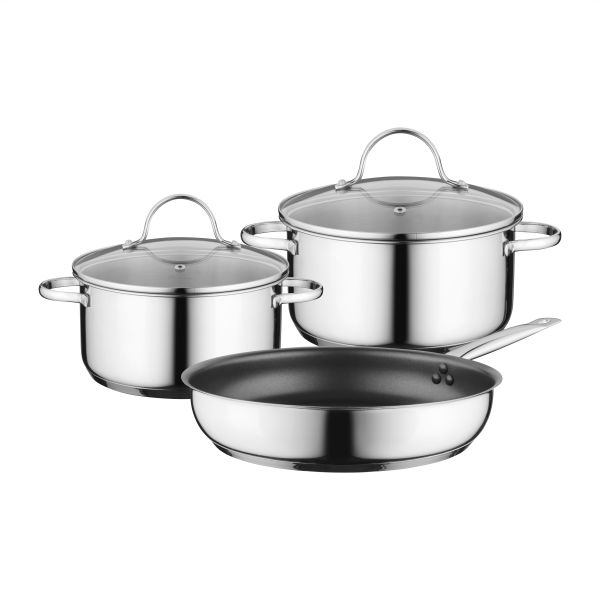
Things to consider: induction only works with pans that have a magnetic base, such as cast iron and most stainless steel. A simple test is to hold a fridge magnet to the bottom of your pans: if it sticks firmly, the pan will work on induction. If you need to replace some pans, an induction-ready set such as the Bosch 3-piece induction pan set is a simple fix. Induction hobs also tend to have a higher purchase price, and many need a dedicated electrical circuit, so check the installation requirements and have the hob connected by a qualified electrician.
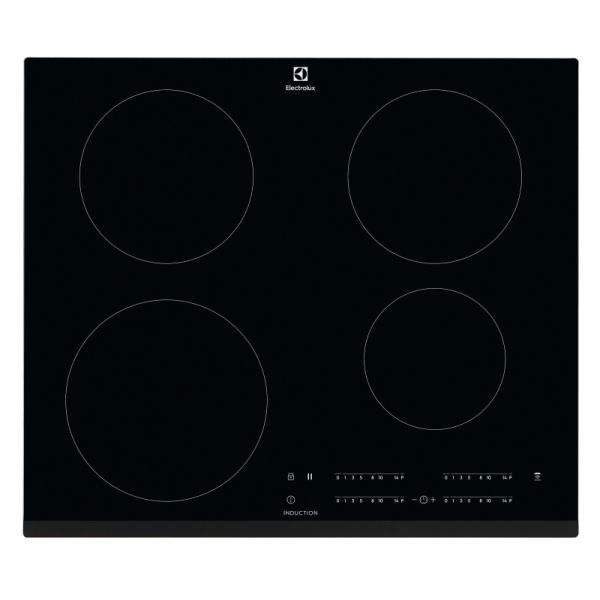
Examples from our range include the Electrolux LIT604, a 60cm, four-zone induction hob with slider touch controls.
Gas Hobs
Gas hobs remain popular with keen cooks who like the instant, visible response of a flame. You can see exactly how much heat you are using, and you can turn it up or down immediately.
Advantages:
- Visual, instant control that many people find intuitive.
- Works with almost any cookware, including woks and round-bottomed pans.
- Lower purchase price than many induction hobs.
Things to consider: gas hobs take more effort to clean, because the pan supports and burner caps need to be lifted off and washed. A lot of the flame's heat goes into the surrounding air rather than the pan, so the kitchen gets warmer. You will need a gas supply at the hob position, and in the UK any gas appliance must be installed by a Gas Safe registered engineer.
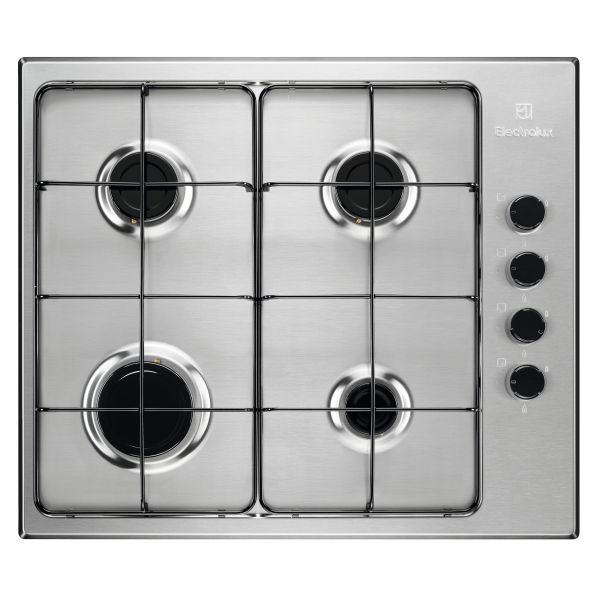
The Electrolux KGS6404X is a 60cm, four-burner gas hob in stainless steel with enamelled pan supports and side rotary dials.
Ceramic Hobs
Ceramic hobs have electric heating elements beneath a smooth glass-ceramic surface. The elements heat the glass, which then heats the pan.
Advantages:
- Usually the most affordable of the three.
- Works with most flat-based cookware.
- Flat glass surface that is easy to wipe clean.
- No gas supply needed.
Things to consider: ceramic hobs are slower to heat up and cool down than induction, so they are less responsive when you change the temperature. The surface stays hot for some time after cooking. Look for residual heat indicators, which show which zones are still hot.
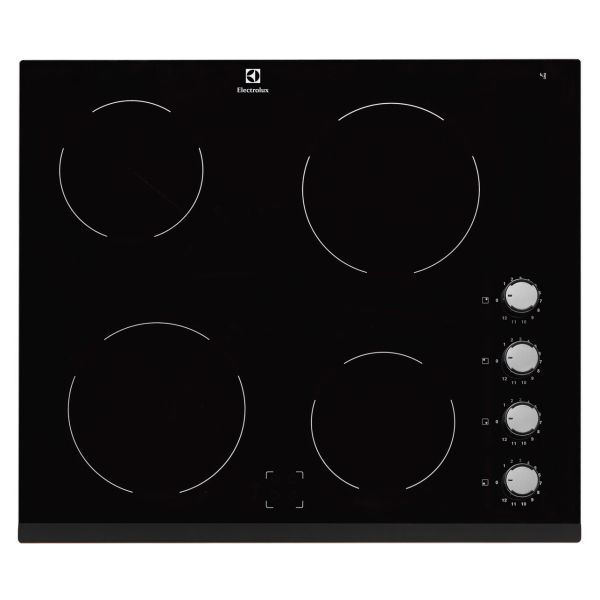
The Electrolux EHF6140FOK is a 60cm, four-zone ceramic hob with rotary dials and residual heat indicators.
Venting Hobs: Hob and Extractor in One
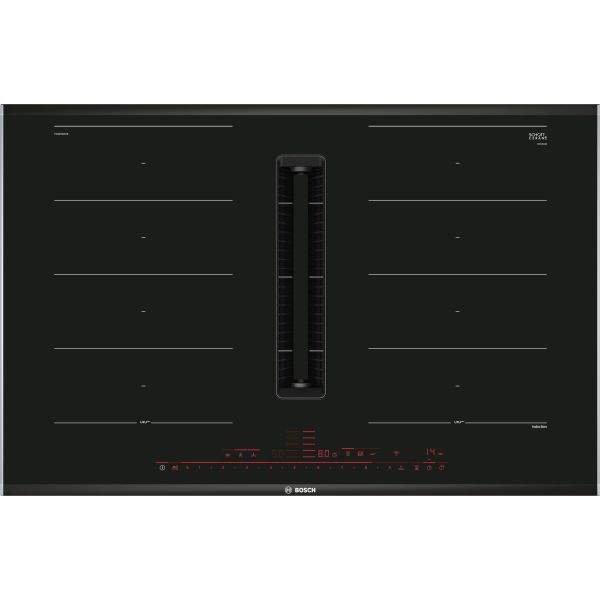
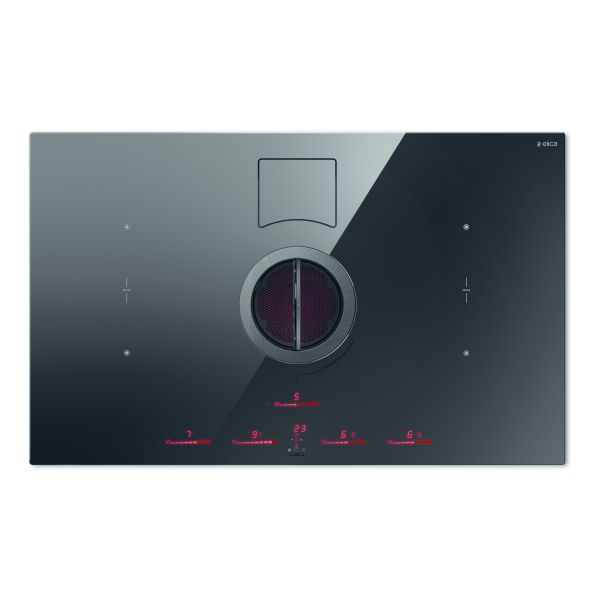
A venting hob is an induction hob with an extractor built into the centre, which draws steam and smells down into the unit as you cook. There is no hood above, so it is ideal for kitchen islands, under sloping ceilings, or anywhere you want to keep the view open.
Examples include the Bosch Series 8 PXX875D67E, an 80cm venting induction hob with a maximum extraction rate of 622 m³/h, and the Elica NikolaTesla Switch, an 85cm venting hob with bridge zones, pan detection and an automatic function that sets the extraction power by sensing the cooking fumes. Venting hobs sit at the top of the price range, and they need more space in the cabinet below for the motor and ducting or filters.
Which Hob Is Right for You?
- Choose induction if you want the fastest, most precise cooking, the easiest cleaning and a cooler, safer surface, and you are happy to check your pans are compatible.
- Choose gas if you love cooking with a visible flame, use a wok or round-bottomed pans, and already have a gas supply in the kitchen.
- Choose ceramic if you want an affordable electric hob with a sleek glass finish and are happy with slightly slower response times.
- Choose a venting hob if your hob is on an island or you want to do away with a cooker hood altogether.
Don't Forget the Extraction
Whichever hob you choose (unless it is a venting hob), you will need a cooker hood to deal with steam and cooking smells. The hood should generally be at least as wide as the hob. Our guide on how to choose a cooker hood explains sizing, extraction rates and ducting in detail.
Compare induction, gas, ceramic and venting hobs from brands including Neff, Bosch, AEG, Electrolux and Elica in our full hobs range.
Shop HobsFrequently Asked Questions
Is induction better than gas?
Induction is faster, more efficient and easier to clean than gas, with very precise control. Gas offers a visible flame and works with almost any pan, including woks. The best choice depends on how you like to cook.
How do I know if my pans work on induction?
Hold a magnet to the base of the pan. If it sticks firmly, the pan will work on an induction hob. Cast iron and most stainless steel pans are compatible.
What is the difference between ceramic and induction hobs?
Both have a flat glass surface. A ceramic hob heats elements under the glass, which then heats the pan, so it is slower to respond. An induction hob heats the pan directly with a magnetic field, so it is faster and the glass cools more quickly.
Who can install a gas hob?
In the UK, any gas appliance must be installed by a Gas Safe registered engineer.
What is a venting hob?
A venting hob is an induction hob with an extractor built into its centre, which draws steam and smells down as you cook, so no separate cooker hood is needed.