

A good cooker hood does far more than look smart above your hob. It removes steam, cooking smells and airborne grease before they settle on your cabinets, walls and ceiling, and it helps keep condensation under control. Choosing one means balancing style, size, extraction power and noise, and deciding whether to duct the air outside or recirculate it. This guide explains each choice, with examples from our cooker hoods range.
Types of Cooker Hood
The right type of hood depends mostly on where your hob is and the look you want.
Chimney Hoods
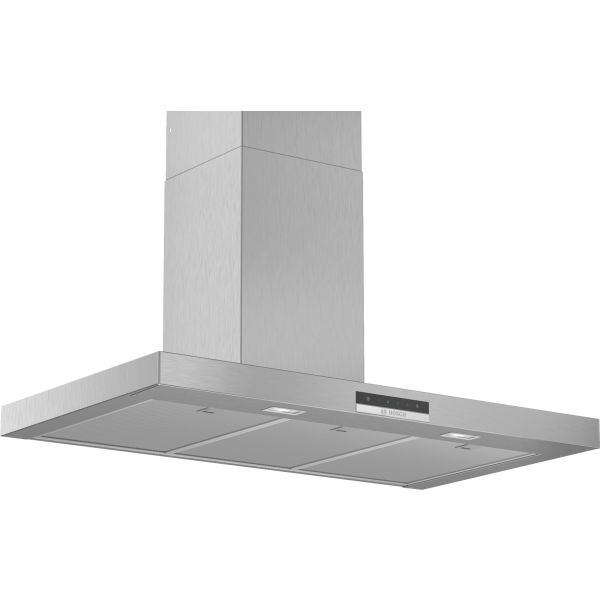
Chimney hoods are wall-mounted with a visible chimney section running up to the ceiling. They are the most common choice when the hob sits against a wall, and they make a design feature of the extraction. The Bosch Series 4 DWB96DM50B, for example, is a 90cm box-design chimney hood with LED lighting, three speed settings and an intensive boost.
Integrated and Canopy Hoods
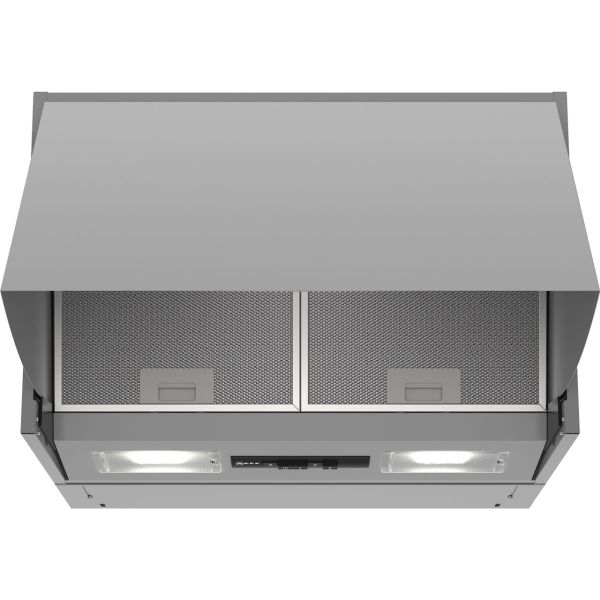
Integrated hoods are built into a wall cabinet above the hob, so they are almost invisible when not in use. They suit fitted kitchens where you want clean, uninterrupted lines. Despite their discreet size they can be powerful: the Neff N30 D64MAC1X0B 60cm integrated hood has a maximum extraction rate of 625 m³/h.
Island Hoods
If your hob is on a kitchen island, an island hood is suspended from the ceiling directly above it. Island hoods are often a statement piece. The Elica Haiku is a 120cm island hood with adjustable height, LED strip lighting and the option of either recirculation or ducting out.
Ceiling Hoods
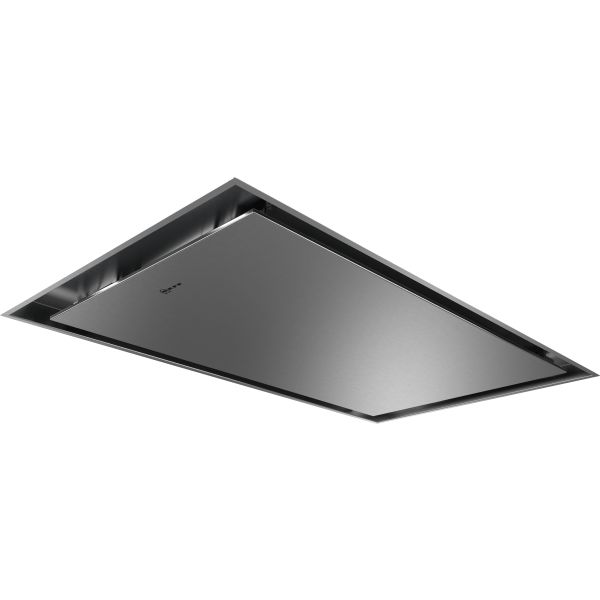
Ceiling hoods are fitted flush with, or close to, the ceiling. They keep sight lines completely open, which makes them popular in open-plan kitchens and over islands. The Neff N50 I95CAQ6N0B is a 90cm ceiling hood that works with the Home Connect app, so you can check the state of the filters and receive maintenance information.
Downdraft Extractors
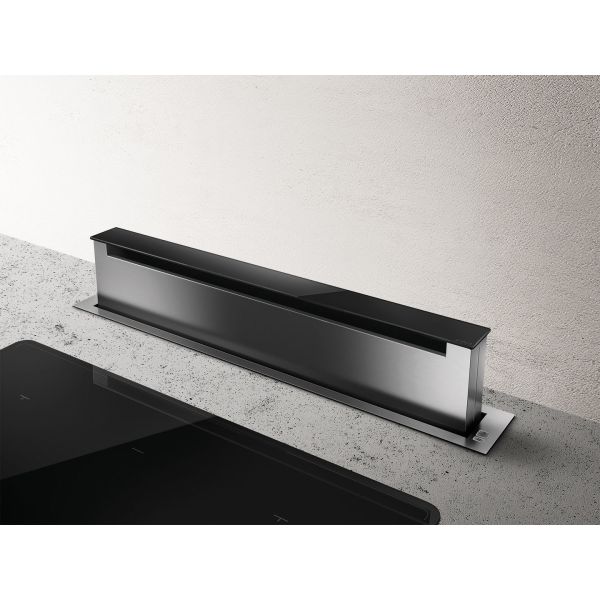
A downdraft extractor sits in the worktop behind the hob and rises up when you need it, drawing steam and smells down rather than up. It is the most discreet option of all for islands and peninsulas. The Elica Pandora 90cm downdraft has a maximum extraction rate of 665 m³/h.
Venting Hobs
An increasingly popular alternative is a venting hob, which builds the extractor into the centre of the hob itself, so there is no separate hood at all. We cover these in our guide to induction, gas and ceramic hobs.
Ducted or Recirculating?
Every cooker hood works in one of two ways, and some can be set up either way.
Ducted (extraction) hoods carry air out of the building through ducting and an external wall or roof vent. This is generally the most effective method, because steam and smells are removed from the kitchen entirely. It does require a suitable route for the ducting to the outside, which is easiest to plan when the kitchen is being fitted.
Recirculating hoods pull air through a grease filter and a charcoal (carbon) filter, then return the cleaned air to the room. They can be installed almost anywhere, which makes them the practical choice for internal walls, apartments, or islands where ducting isn't possible. The charcoal filters need replacing (or regenerating, if they are regenerable) to keep working effectively.
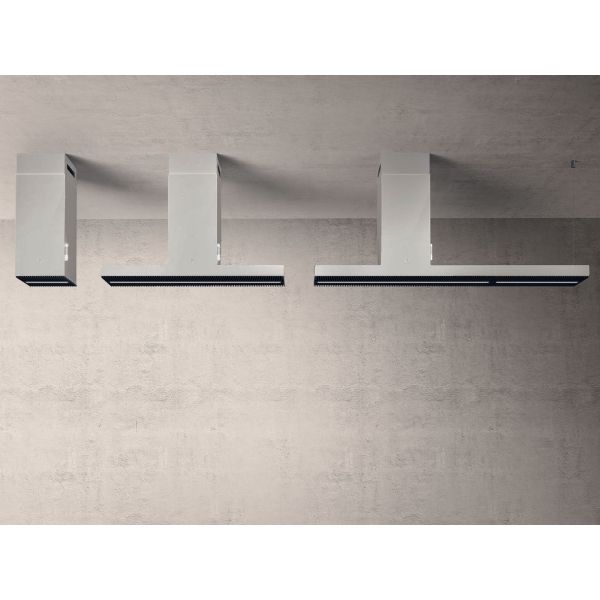
Several of the hoods in our range, including the Elica Haiku and Pandora, can be configured for either mode. Some, like the Elica Cloud Seven ceiling hood, are sold in separate ducted and recirculating versions.
What Size Cooker Hood Do You Need?
A common rule of thumb is that your hood should be at least as wide as your hob, and ideally slightly wider, so that rising steam is captured at the edges. Hoods are typically available in 60cm, 90cm and wider sizes to match standard hob widths. For example, a 60cm hob would usually be paired with a 60cm or 90cm hood, and a 90cm range cooker with a 90cm hood or larger.
Mounting height matters too. Each manufacturer specifies a minimum distance between the hob and the bottom of the hood, which is often greater for gas hobs than electric ones. Always follow the installation instructions for your hood and hob.
Extraction Rate: How Powerful Should It Be?
Extraction rate is measured in cubic metres per hour (m³/h). A widely used rule of thumb is that a hood should be able to change the air in the kitchen around ten times an hour. To estimate the figure for your kitchen:
- Multiply the length, width and height of the room in metres to get its volume.
- Multiply that volume by 10.
For example, a kitchen measuring 4m × 3.5m with a 2.4m ceiling has a volume of 33.6m³, so you would look for an extraction rate of roughly 340 m³/h or more. Open-plan spaces and keen cooks will benefit from extra headroom, since the hood will rarely need to run at full power. As a guide to what's available, the hoods mentioned in this article range from 372 m³/h for the Bosch Series 4 chimney hood up to 665 m³/h for the Elica Pandora downdraft.
Bear in mind that manufacturers' maximum figures are usually measured on the most powerful setting. A ducted installation with a short, straight duct run will get closer to the rated performance than a long run with several bends.
Noise Levels
Noise is measured in decibels, dB(A), and lower numbers are quieter. It is worth comparing, especially in open-plan living spaces where the hood runs while people are talking or watching TV. Among the hoods above, the Elica Haiku island hood is rated at 53 dB(A) and the Neff N50 ceiling hood at 56 dB(A). Check whether the quoted figure is for the normal or boost setting, as boost modes are noticeably louder.
Features Worth Looking For
- Boost setting: a short burst of maximum power for frying and searing.
- LED lighting: bright, efficient lighting over your hob.
- Dishwasher-safe grease filters: metal grease filters that are easy to clean.
- Filter indicators and connectivity: reminders when filters need attention, such as through Neff's Home Connect app.
- Sensor or automatic modes: some hoods and venting hobs adjust their power automatically to match the cooking.
Browse our full range of chimney, integrated, island, ceiling and downdraft hoods from brands including Elica, Bosch, Neff and AEG.
Shop Cooker HoodsChoose Your Hood and Hob Together
Your hood and hob work as a pair, so it makes sense to choose them at the same time. Read our comparison of induction vs gas vs ceramic hobs, or browse our full range of kitchen appliances.
Frequently Asked Questions
What size cooker hood do I need?
A common rule of thumb is that the hood should be at least as wide as the hob, and ideally slightly wider. Hoods are typically available in 60cm, 90cm and wider sizes to match standard hob widths.
How do I work out the extraction rate I need?
Multiply the length, width and height of your kitchen in metres to get its volume, then multiply by 10. For a 4m × 3.5m kitchen with a 2.4m ceiling, that suggests around 340 m³/h or more.
Is a ducted or recirculating cooker hood better?
Ducted hoods are generally more effective because they remove steam and smells from the building entirely. Recirculating hoods filter the air through grease and charcoal filters and return it to the room, so they can be fitted where ducting isn't possible.
How high should a cooker hood be above the hob?
Each manufacturer specifies a minimum distance between the hob and the bottom of the hood, which is often greater for gas hobs than electric ones. Always follow the installation instructions for your hood and hob.
What is a downdraft extractor?
A downdraft extractor sits in the worktop behind the hob and rises up when needed, drawing steam and smells downwards. It is a discreet option for kitchen islands and peninsulas.