

The kitchen sink is the most used part of any kitchen, yet it is often chosen last, once the units and worktops are already decided. Getting it right means thinking about material, how it is mounted, how many bowls you need and whether it will fit the cabinet underneath. This guide walks through each decision in turn so you can choose a sink that looks right and works hard for years. You can browse every option in our kitchen sinks range as you read.
1. Choose Your Sink Material
Material affects how a sink looks, how it wears and how much care it needs. The three most popular options are stainless steel, granite composite and ceramic.
Stainless Steel
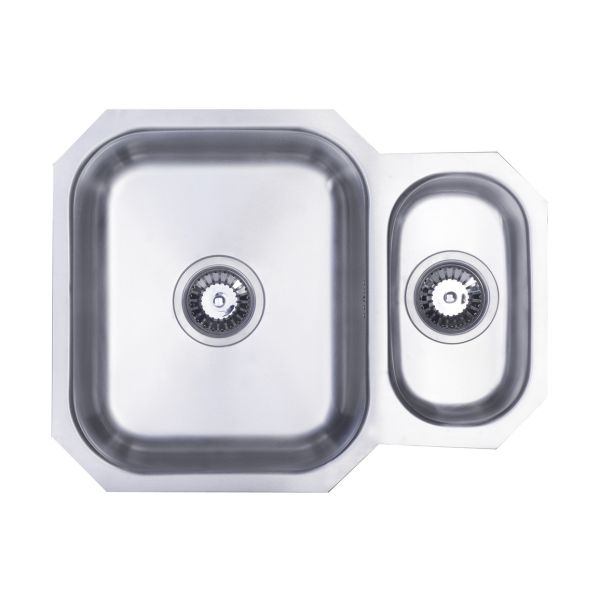
Stainless steel is the practical all-rounder. It is hygienic, resistant to heat and staining, lightweight and generally the most affordable option. It suits everything from contemporary handleless kitchens to busy family kitchens where durability matters most. Look at the grade and thickness of the steel: the Abode Trydent, for example, is made from durable 304 stainless steel, and the Prima undermount range uses 0.8mm gauge steel with a powder-coated underside. Stainless steel will pick up fine surface scratches over time, which soften into an even patina.
Granite Composite
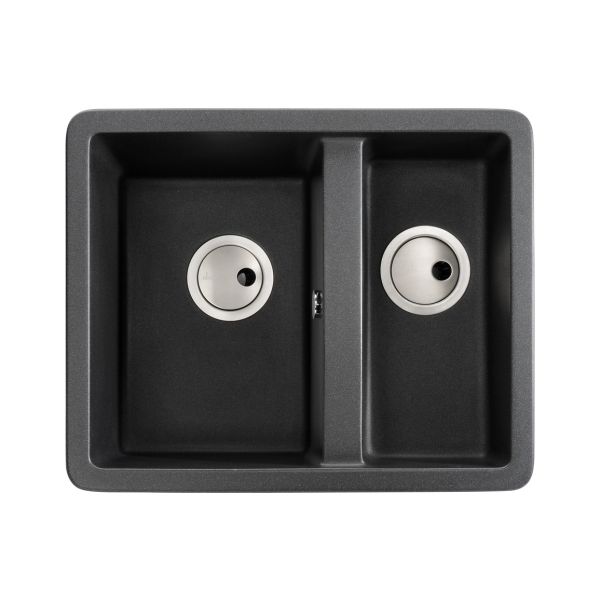
Granite composite sinks are made from crushed stone bound with resin. They have a solid, matt finish that feels premium, comes in colours such as black and white, and is a strong choice if you want the sink to blend with a stone or quartz worktop. The Abode Matrix Sq GR15 range, for example, has softened square edges for a sharp but easy-to-clean look, and comes in black metallic or white.
Ceramic and Fireclay
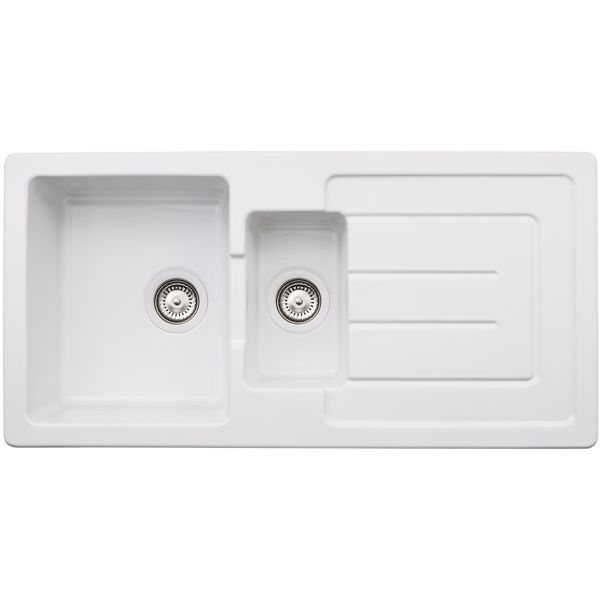
Ceramic sinks bring a classic look with a high-gloss glazed finish that is easy to wipe clean. Fireclay is a particularly dense, durable type of ceramic and is the traditional choice for farmhouse, shaker and country kitchens. The Abode Acton sinks, for example, are made from fine-grade fireclay with a white gloss finish. Ceramic is heavier than steel, so it needs solid support, and as with any glazed surface, dropping heavy cast iron pans can chip it.
| Material | Best for | Things to consider |
|---|---|---|
| Stainless steel | Durability, hygiene, value, modern kitchens | Shows fine scratches over time |
| Granite composite | Matching stone or quartz worktops, coloured sinks | Usually a higher price than steel |
| Ceramic / fireclay | Traditional, shaker and country kitchens | Heavier; glaze can chip if struck |
2. Inset or Undermount?
How the sink is fitted to the worktop has a big effect on how the finished kitchen looks.
Inset sinks (also called top-mount sinks) drop into a hole cut in the worktop, with a rim that sits on top of the surface. They are the most versatile choice, they suit laminate worktops, and they are usually the easiest to install or replace.
Undermount sinks are fixed beneath the worktop so the edge of the worktop is exposed. This gives a seamless, contemporary look and lets you wipe crumbs and water straight into the bowl. Undermount sinks are normally fitted under solid surfaces such as granite, quartz or solid wood, because the exposed edge of the cut-out has to be finished and sealed. Some sinks, such as the Abode Matrix Sq GR15, are designed to be fitted either inset or undermount, which gives you flexibility if you haven't settled on a worktop yet.
3. Bowl Configuration
Sinks are usually described by the number of bowls:
- Single bowl (1B): one bowl, often large and deep enough for roasting tins and big pans. Ideal for smaller kitchens or if you have a dishwasher and don't need a second bowl.
- One and a half bowl (1.5B): a main bowl plus a smaller half bowl. The half bowl is useful for rinsing vegetables, draining pasta or leaving things to soak while the main bowl stays free. It is a popular all-round choice for UK kitchens.
- Double bowl (2B): two full-size bowls, suited to larger kitchens and households that wash up by hand.
Also decide whether you want an integrated drainer. A drainer gives you somewhere to leave washed items to dry, while a sink without one maximises usable worktop. Many sinks are reversible, so the drainer can sit on either side to suit your layout.
4. Measure Your Cabinet and Worktop
Every sink needs a base cabinet wide enough to support it, and manufacturers state a minimum cabinet width for each model. As examples from our range, the compact Abode Trydent single bowl suits cabinets of 450mm or wider, while the Prima 1.5 bowl undermount and the Abode Matrix Sq GR15 1.5 bowl need cabinets of 600mm or wider. Before you order, check:
- The minimum cabinet width for the sink.
- The cut-out dimensions against your worktop, especially near corners and appliances.
- The bowl depth. Deeper bowls hide dishes and contain splashes, but very deep bowls can be less comfortable to use for long periods.
- That there is space under the sink for pipework and anything else you plan to fit there, such as a boiling water tap tank or food waste disposer.
5. Plan the Tap, Waste and Extras Together
The sink, tap and waste work as a system, so it pays to choose them together.
Tap holes and reach: make sure the tap's spout reaches comfortably into the main bowl. Our kitchen mixer taps list the spout reach and height for each model, and our kitchen taps buying guide explains the different tap types.
Boiling water: if you want instant boiling water, choose a sink and tap arrangement that suits a boiling water tap. Our boiling water taps guide explains the options.
Food waste disposers: if you plan to fit a food waste disposer, check that the sink is compatible. The Prima undermount sinks, for example, are listed as waste disposal compatible. See our food waste disposer guide for more.
Save Time With a Sink and Tap Pack
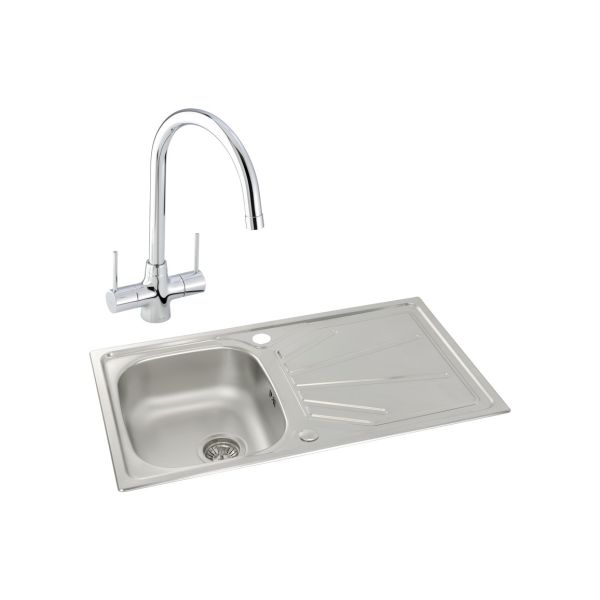
If you want a matched sink and tap without comparing dimensions yourself, a sink pack bundles the two together. The Abode Trydent pack, for example, pairs a compact 304 stainless steel inset sink, which comes with a 10-year guarantee, with a choice of tap.
Look After Your New Sink
Whatever material you choose, a few simple habits will keep it looking its best: rinse and wipe the sink dry after use to prevent water marks, avoid harsh abrasive pads on polished or glazed finishes, and follow the manufacturer's care guidance for granite composite. Check the guarantee too. Across our range, guarantees typically run from 10 years (Abode granite, fireclay and steel sinks) to 20 years on the Prima undermount stainless steel sinks.
Explore our full range of stainless steel, granite and ceramic kitchen sinks from Abode and Prima, or call into our Newry showroom for advice.
Shop Kitchen SinksFrequently Asked Questions
What is the most durable kitchen sink material?
Stainless steel, granite composite and fireclay are all durable choices. Stainless steel resists heat and staining and is the most forgiving; granite composite has a hard-wearing matt finish; fireclay is very dense, though its glaze can chip if struck by a heavy pan.
Can I fit an undermount sink with a laminate worktop?
Undermount sinks are normally fitted beneath solid surfaces such as granite, quartz or solid wood, because the exposed edge of the cut-out has to be finished and sealed. With a laminate worktop, an inset sink is usually the better choice.
Is a 1.5 bowl sink better than a single bowl?
A 1.5 bowl sink adds a small second bowl for rinsing, draining and soaking while the main bowl stays free, which suits most family kitchens. A single bowl gives you the largest possible main bowl and suits smaller kitchens or homes that rely on a dishwasher.
What size cabinet do I need for a kitchen sink?
Each sink has a minimum cabinet width. As examples, the compact Abode Trydent single bowl suits cabinets of 450mm or wider, while the Prima 1.5 bowl undermount and Abode Matrix Sq GR15 1.5 bowl need 600mm or wider.
Can I fit a food waste disposer to any sink?
Not every sink is suitable, so check compatibility before you buy. Some sinks, such as the Prima undermount range, are specifically listed as waste disposal compatible.