

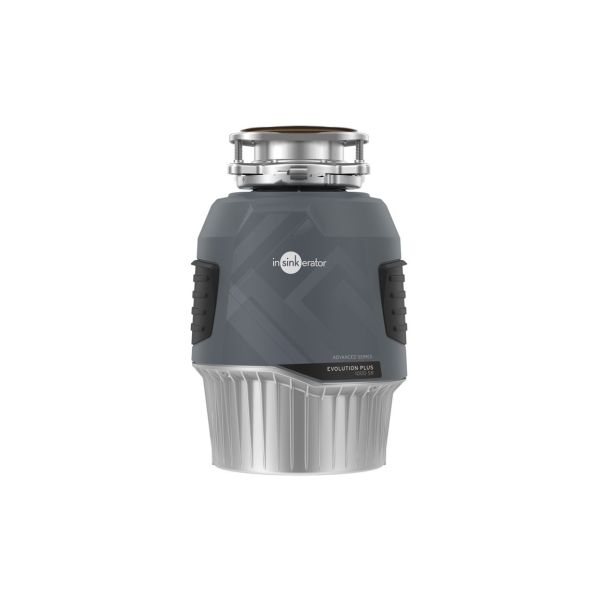
A food waste disposer (also called a waste disposal unit) fits under your kitchen sink and grinds food scraps into fine particles that are washed away with the water from your tap. It is a simple idea that makes a real difference day to day: less food waste in the bin, fewer smells, and plates and pans that can be scraped straight into the sink. This guide explains how disposers work, how to compare models, and what you need to know before installing one. You can see the models we stock in our food waste disposal units range.
How Does a Food Waste Disposer Work?
The disposer is mounted to the waste outlet of your sink. When it is switched on, a motor spins a grinding plate inside the unit. Food scraps are pushed against a grind ring by the spinning plate and reduced to very small particles, which are carried away into your drain by running cold water.
Despite the name, there are no sharp blades. The grinding action works by spinning food against the grind ring, which is one reason disposers can handle everyday food waste reliably.
Continuous Feed and the Air Switch
The models we stock are continuous feed disposers. You turn the unit on, run the cold tap, and feed food waste in gradually while it runs. This is the quickest and most convenient type for everyday use.
They are operated with an air switch: a push button mounted on the sink or worktop that turns the disposer on and off using a pulse of air rather than an electrical connection. That keeps electrical switches away from the wet sink area. Each of the InSinkErator disposers in our range is supplied with an air switch, and on the 550SR and above it comes in a choice of chrome, brushed steel or black finishes to match your tap.
Comparing Disposers: Motor Power and Grind Stages
The two specifications that matter most are motor power and the number of grind stages.
- Motor power is measured in horsepower (HP). A more powerful motor grinds tougher waste more easily and copes better with larger volumes.
- Grind stages describe how many steps the food passes through. More stages produce finer particles, which flow away more easily.
Here is how the InSinkErator range we stock compares, all with a Dura-Drive induction motor:
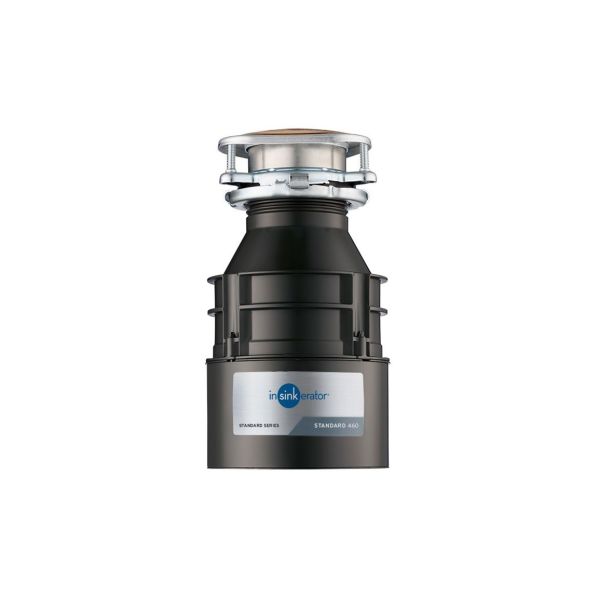
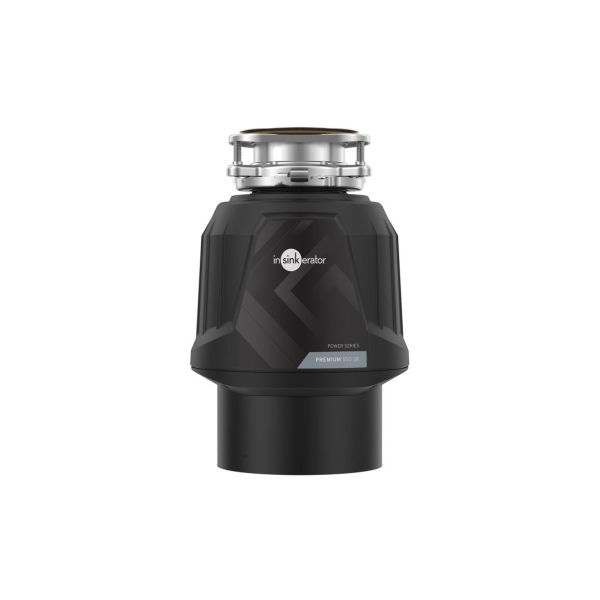
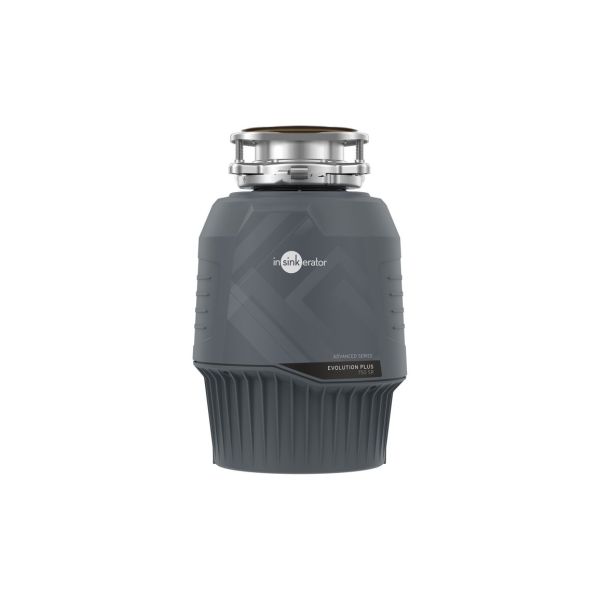
| Model | Motor | Grind stages | Baffle |
|---|---|---|---|
| S460 | 0.5HP | 1 | Standard |
| 550SR | 0.55HP | 2 | Quiet collar |
| 700SR | 0.7HP | 2 | Quiet collar |
| 750SR | 0.75HP | 3 | Anti-microbial vented |
| 1000SR | 1.0HP | 4 | Anti-microbial vented |
The baffle is the rubber collar in the sink opening. It stops food and water splashing back up and, on the quiet collar and vented designs, helps to reduce noise and odour.
Which Model Is Right for You?
- Smaller households and lighter use: the S460 is an entry-level disposer with a 0.5HP motor and single-stage grinding.
- Most family kitchens: the 550SR and 700SR step up to two-stage grinding and a quiet collar baffle.
- Keen cooks and larger households: the 750SR and 1000SR add three- and four-stage grinding with more powerful motors, for the finest grind and the toughest waste.
Installation Checklist
A food waste disposer is a straightforward installation for a plumber, but check the following first:
- Sink compatibility. The disposer mounts to the sink's waste outlet, so check that your sink can take one. Some sinks are specifically listed as waste disposal compatible, such as the Prima undermount range. Our guide on how to choose a kitchen sink covers this.
- Cupboard space beneath the sink, including room for any boiling water tap tank or water filter you plan to fit.
- An electrical supply under the sink for the unit. Have this fitted by a qualified electrician if you don't already have one.
- Your drainage. If your home uses a septic tank or private drainage system rather than mains drainage, check with the manufacturer before installing.
- Dishwasher connection. If your dishwasher drains through the same pipework, an InSinkErator dishwasher connection kit provides the parts needed to connect the dishwasher drain to the disposer.
Using Your Disposer Well
A few good habits will keep a disposer running smoothly for years:
- Always run cold water while the disposer is grinding and for a few seconds afterwards to flush the particles through.
- Feed waste in gradually rather than packing the chamber full.
- Don't pour fats, oils or grease down the sink, with or without a disposer, as they can solidify in drains.
- Never put non-food items such as glass, metal, plastic or cigarette ends into the disposer.
- Check the manufacturer's guidance for the specific types of food your model can handle.
Is a Food Waste Disposer Worth It?
If you cook regularly, a disposer can noticeably reduce the amount of food waste going into your kitchen bin, which means fewer smells and fewer trips outside, especially in summer. It also makes clearing up quicker, because you can scrape plates straight into the sink. The main considerations are the upfront cost, the cupboard space it takes up, and making sure your sink and drainage are suitable.
See our full range of InSinkErator food waste disposers and accessories, or contact our Newry showroom for help choosing the right model.
Shop Food Waste DisposersPlanning a new sink area? Read our guides to choosing a kitchen sink and boiling water taps.
Frequently Asked Questions
How does a food waste disposer work?
A motor spins a grinding plate inside the unit, pushing food scraps against a grind ring until they are reduced to very fine particles. Running cold water then carries the particles away into your drain.
What is an air switch on a waste disposer?
An air switch is a push button on the sink or worktop that turns the disposer on and off with a pulse of air rather than an electrical connection, which keeps electrical switches away from the wet sink area.
What shouldn't go in a food waste disposer?
Don't pour fats, oils or grease down the sink, and never put non-food items such as glass, metal, plastic or cigarette ends into a disposer. Check the manufacturer's guidance for the specific foods your model can handle.
What do more grind stages mean?
Grind stages describe how many steps food passes through. More stages produce finer particles that flow away more easily. In our InSinkErator range, the S460 has one stage, the 550SR and 700SR have two, the 750SR has three and the 1000SR has four.
Can I connect my dishwasher to a food waste disposer?
Yes. A dishwasher connection kit, such as the InSinkErator dishwasher connector kit, provides the parts needed to connect a dishwasher drain to an InSinkErator disposer.