

Have a look in your freezer before you choose a new fridge freezer. If it holds a bag of peas, some ice and a tub of something you've forgotten about, you want a very different appliance from someone who batch-cooks on a Sunday and freezes the lot.
That's the split decision, and it matters more than most of the features. Get the split right, measure the housing properly, and almost any decent integrated model will do the job.
70/30, 60/40 or 50/50
The numbers describe roughly how the height is shared between the fridge on top and the freezer below. In a standard integrated fridge freezer, around 177cm tall and built into a 60cm housing, here's what that means in practice.
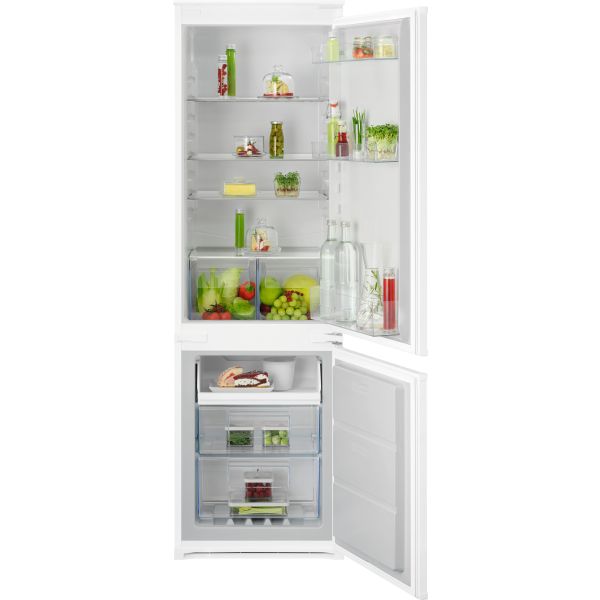
- 70/30 suits people who shop fresh and often. The AEG OSC7N181ES has 195 litres of fridge and 62 litres of freezer. Plenty of room for salad, milk and leftovers, and enough freezer for the basics.
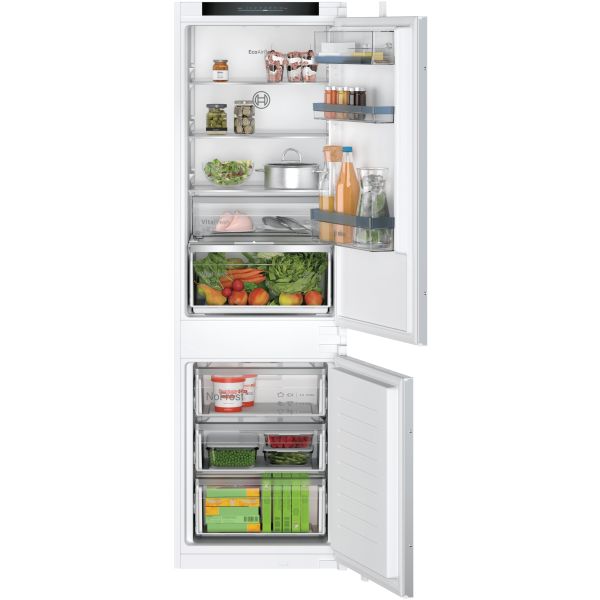
- 60/40 is the middle ground, and the one we'd pick if you're not sure. The Bosch Series 4 KIN86VSE0G has 184 litres of fridge space with a NoFrost freezer below.
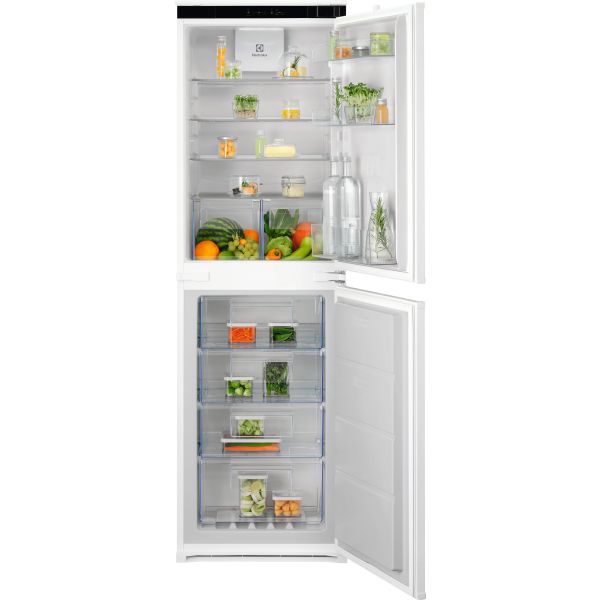
- 50/50 is for the big weekly shop and people who freeze a lot. The Electrolux LNA7TE18S5 gives you 154 litres of fridge and 88 litres of freezer, so you lose fridge space but gain a decent amount of freezer.
If you can't decide between two of them, go with the bigger fridge. Running out of fridge space is a daily annoyance. Running out of freezer space happens now and then, and you can usually work around it.
Or skip the combination altogether
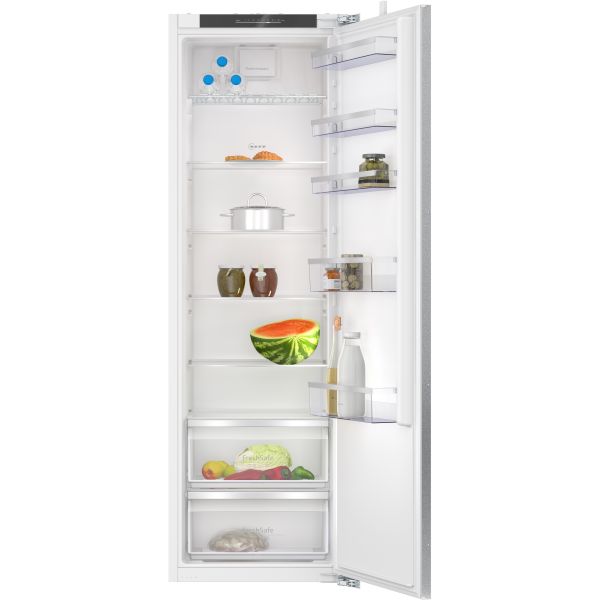
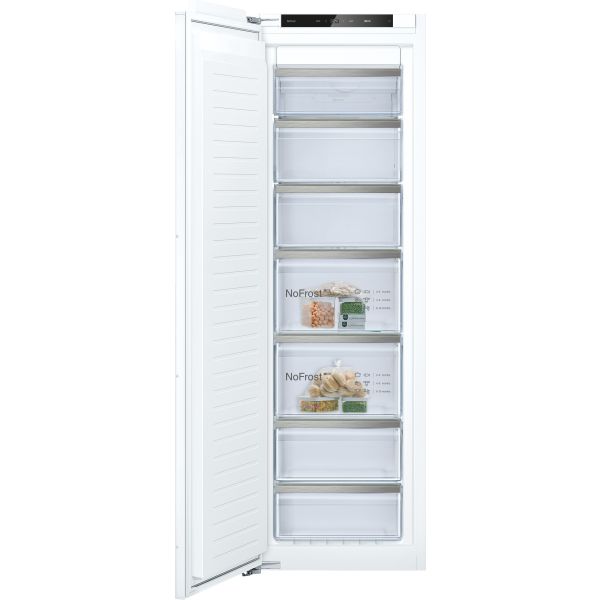
If you have room for two tall housings side by side, a tall larder fridge next to a tall freezer gives you far more of both than any single fridge freezer can. The Neff N50 KI1812FE0G is a tall larder fridge with 310 litres of space, which is more than one and a half times the fridge in a 60/40. Pair it with the Neff N50 GI7812EE0G NoFrost tall freezer and the two match.
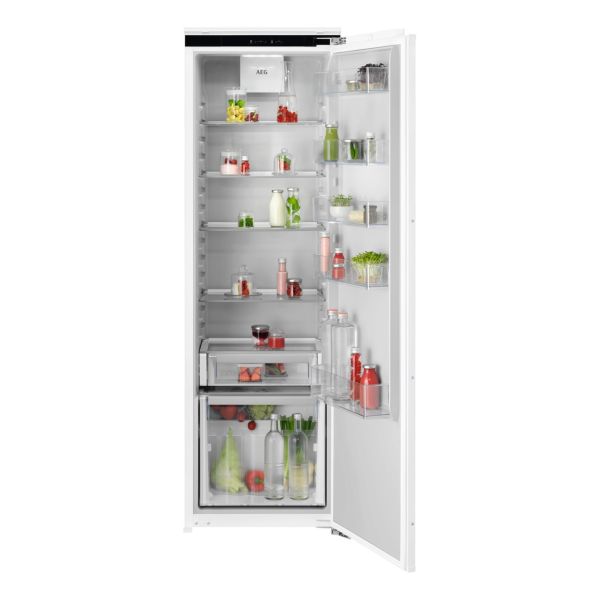
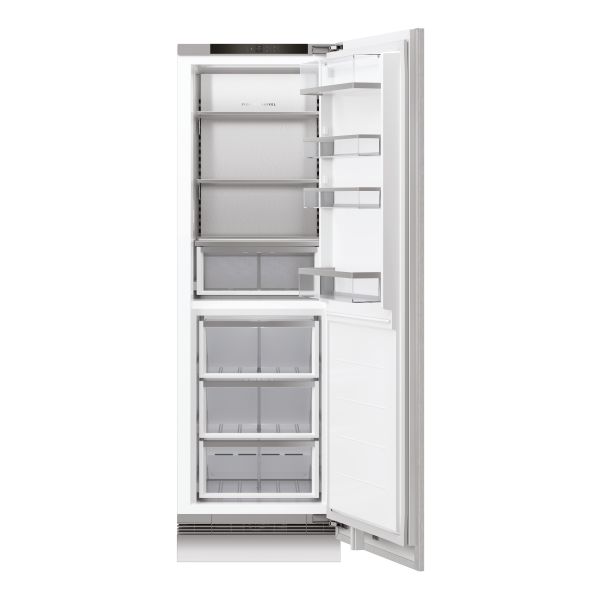
The AEG NSK6D181EC tall larder is another 310 litre option, and at 32dB it's one of the quietest built-in fridges we sell. AEG's NAB7N181EC is the matching NoFrost tall freezer. At the top end, Fisher & Paykel's Series 9 RS6019S2R1 has two independent zones you can set anywhere from 1 to 6°C, a flush fit design with 4mm gaps, and a matching Dual Zone freezer to pair with it.
It costs you a second 60cm of wall and a second appliance. For a family that cooks a lot, it's the setup we'd go for.
Under the counter
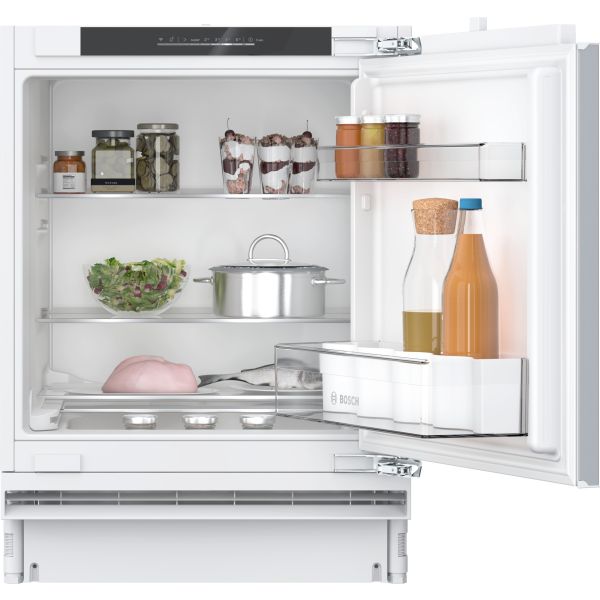
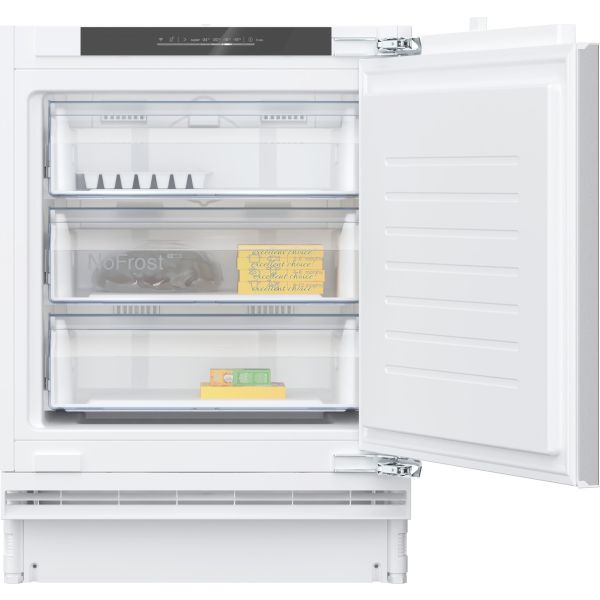
Under-counter fridges and freezers are useful as a second appliance, or in a utility room, or where tall housings would block a window or break up a run of worktop. The Bosch Series 4 KUR21VFE0G is an under-counter larder fridge with 134 litres of space and Home Connect, so you can check on it from your phone. Neff's N50 GU7212FE0G is an under-counter NoFrost freezer, 820mm high.
Fisher & Paykel's Series 9 CoolDrawer is the odd one out. It's a single 855mm wide drawer that can be switched between fridge, freezer, pantry, chill and wine modes, which makes it handy on an island or near the place you make drinks.
Features worth paying for
NoFrost (or Frost Free) is the one feature we'd always pay for on the freezer side. It stops ice building up, so you never have to empty the freezer and defrost it with a bowl of hot water. Low Frost models, like the Neff N50 KI5872FE0G, slow the build-up down but you'll still defrost now and then.
Fresh drawers are worth having if you buy a lot of fruit and veg. Neff's Fresh Safe drawer on the N30 KI7861SE0G is a dedicated fruit and veg drawer, and Bosch's Series 2 KIN85NFE0G has an extra-large MultiBox XXL drawer. Fancier systems are nice, but a good-sized drawer with a humidity setting covers most of what you need.
How loud is it?
Built-in fridge freezers are quiet compared with dishwashers. Most of the integrated models we sell are rated somewhere between 34 and 41dB, and many sit at 35dB. You'll hear the compressor kick in now and then whichever you pick. In an open-plan room, it's worth favouring the lower figures, but don't let a couple of decibels decide it on its own.
A note on wine coolers
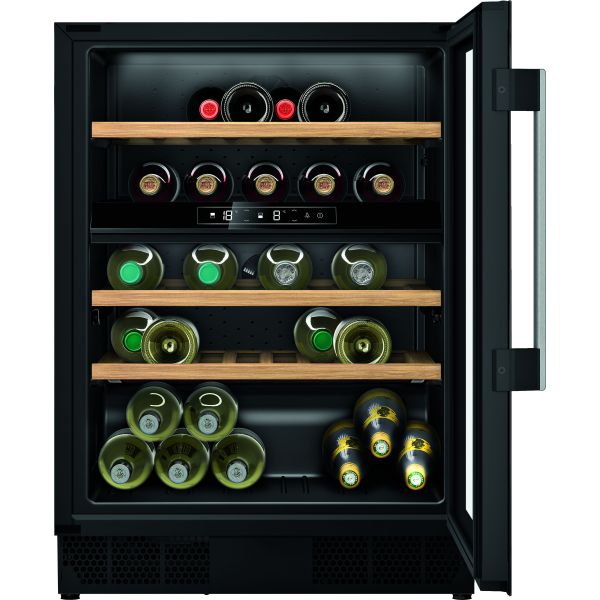
If you want wine at serving temperature without giving up fridge shelves, a 60cm under-counter wine cooler fits where a base unit would. The Neff N70 KU9213HG0G holds 44 bottles in two zones that can be set anywhere between +5°C and +20°C, so reds and whites can each sit at their own temperature. It's a lovely extra, and it's also the first appliance we'd drop if the budget got tight.
Measuring the housing
Integrated fridges go into a housing built for them, so the appliance's own dimensions are only half the story. What you need is the niche size in the installation guide.
Most tall integrated fridges and freezers here are listed at around 1769 to 1775mm high and 540 to 558mm wide, sized for a standard 60cm tall housing. Some don't follow that. The Fisher & Paykel RS6019S2R1 is 1870mm high and designed for custom height installation, so the housing has to be planned around it.
Air flow matters too. A fridge gives off heat, and an integrated one needs a path for air to move, usually in at the plinth and out through a gap at the back or top of the housing. Follow the installation guide on this. A fridge that can't breathe works harder, uses more electricity and is noisier than it should be.
Sliding or fixed hinge
You'll see some models, like the Bosch Series 4 KIN86V and Neff N30 KI7861, sold in two versions. On a fixed hinge model the kitchen door is fixed straight to the appliance door and the two move as one, which feels like opening a normal cupboard. On a sliding hinge model the kitchen door is linked to the appliance door by a runner and slides against it a little as it opens. Both work. The important part is that your kitchen fitter knows which one is coming, because the door is prepared differently for each.
If you're planning the rest of the integrated appliances at the same time, our integrated dishwasher guide covers door heights and hinges on that side. You can see the full fridge and freezer range on our site.
Integrated fridge freezers, tall larders and freezers, under-counter models and wine coolers from Neff, Bosch, AEG, Samsung, Fisher & Paykel and more.
Shop Fridges & FreezersFrequently Asked Questions
What does 70/30 mean on a fridge freezer?
It describes roughly how the space is split, with 70% fridge on top and 30% freezer below. A 70/30 suits people who buy fresh food often, while a 50/50 suits a big weekly shop and plenty of freezing. A 60/40 sits between the two.
Is a frost free fridge freezer worth it?
Yes, for most people. NoFrost or frost free freezers stop ice building up, so you never have to empty and defrost the freezer by hand. Low Frost models slow the ice down but still need an occasional defrost.
What is the difference between a sliding hinge and a fixed hinge fridge?
On a fixed hinge model the kitchen door is fixed directly to the appliance door, so they open together like a normal cupboard. On a sliding hinge model the kitchen door is linked by a runner and slides slightly against the appliance door as it opens. Both are fine, but your fitter needs to know which one is coming.
Do integrated fridges need ventilation?
Yes. The fridge gives off heat, and the housing needs a path for air to move, usually through the plinth and up the back or top of the unit. Follow the installation guide for your model, because a fridge that can't breathe runs harder and louder.
Should I get a fridge freezer or a separate tall fridge and freezer?
If you have room for two tall housings, a tall larder fridge next to a tall freezer gives you far more space than one combined unit. A tall larder fridge can hold around 310 litres on its own. A fridge freezer makes more sense where wall space is limited.