

A plain microwave reheats soup, softens butter and defrosts mince. If that's all yours ever does, the extra you'd spend on a combination model buys you nothing. If you'd like a second oven but don't have room for a double, that's when a combi earns its place.
Built-in microwaves come in three kinds, and they fit two ways. Warming drawers are a separate question, and the honest answer on those comes further down.
Solo, grill or combination
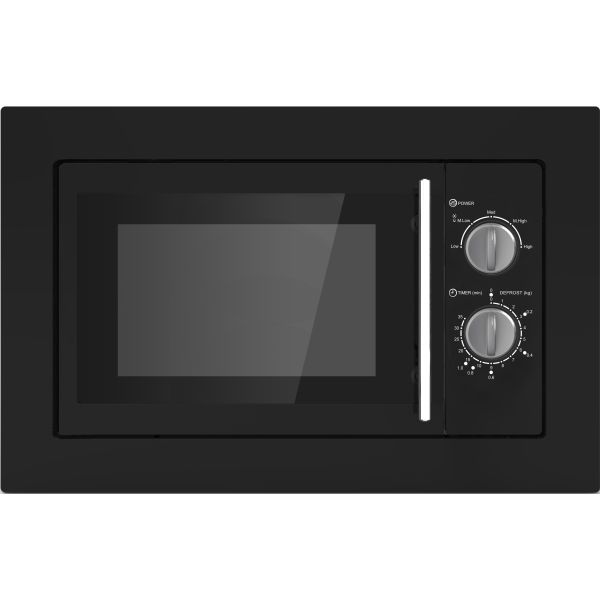
A solo microwave only microwaves. The Prima PRCM202 is a good example: 800W, 20 litres, five power levels and a defrost setting. Nothing more to learn.
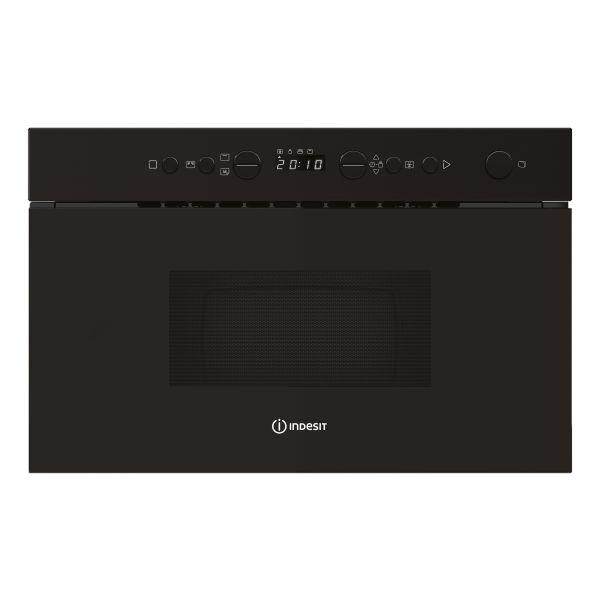
A microwave with grill adds an element in the roof so you can brown the top of a lasagne or crisp up cheese on toast. The Indesit IM K12 BUK has a 750W microwave and a 700W grill in a 22 litre cavity. Go up to the Neff N70 C24GR3XG1B and you get a 1000W microwave, a 1900W grill and 36 litres, in a 45cm high appliance meant for a tall housing.
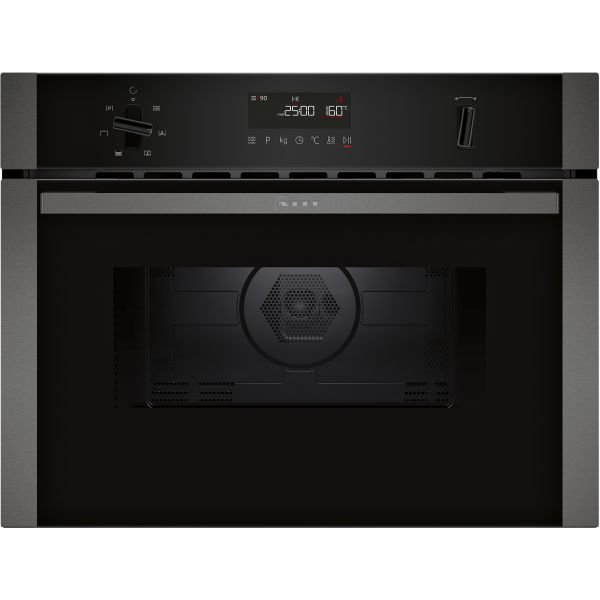
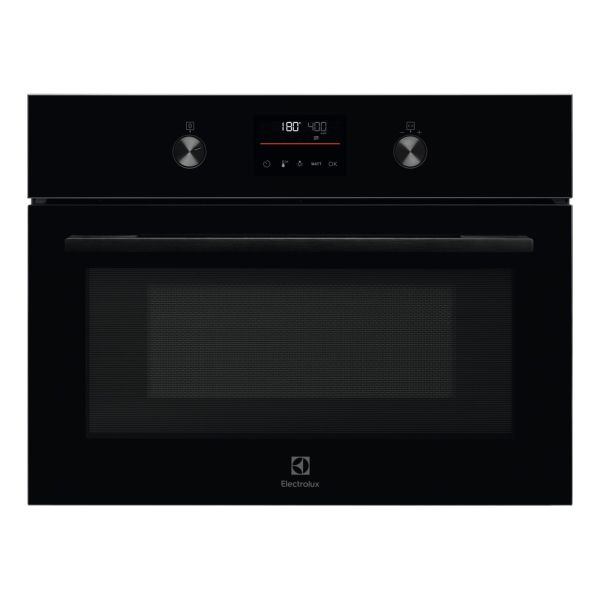
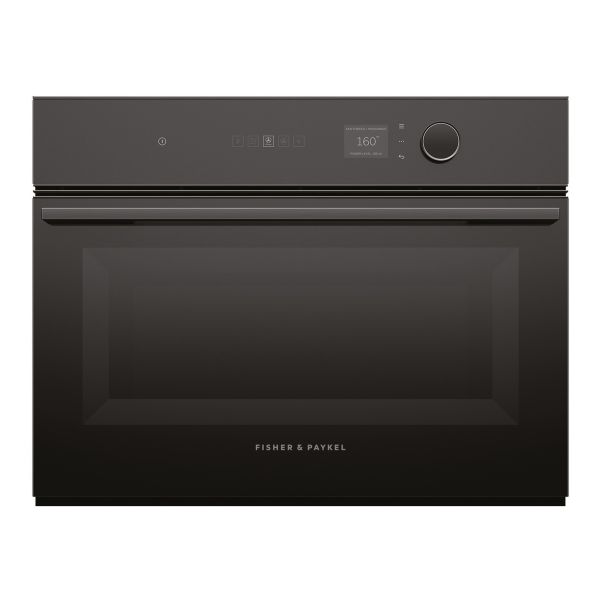
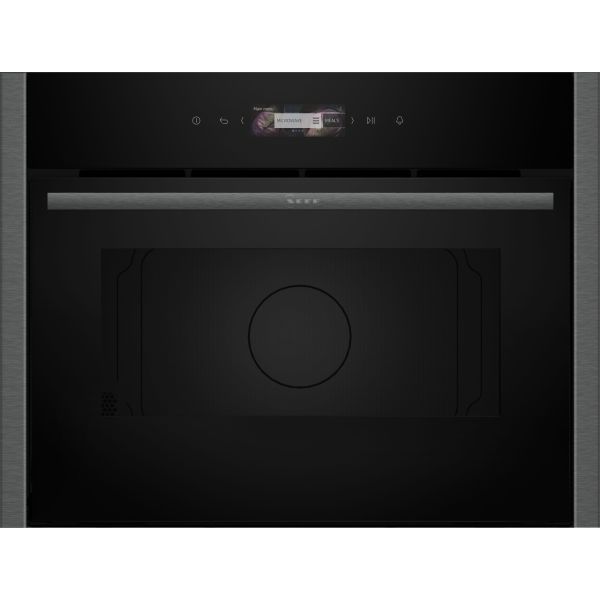
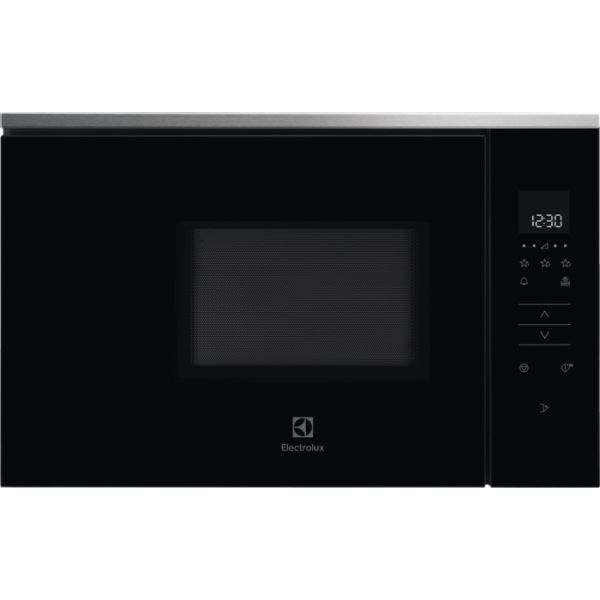
A combination microwave adds a fan oven. You can use it as a microwave, as a small oven, or both together, which speeds up things like jacket potatoes and baked dishes. The Neff N50 C1AMG84G1B has a 900W microwave, a 1750W grill and Neff's Hotair fan cooking in a 44 litre cavity. The Electrolux KVLFE46TK lists a Hot Air fan, turbo grilling and a pizza setting with 43 litres. Fisher & Paykel's Series 7 OM60NMLB1 has 38 litres, four shelf positions and 19 cooking functions, including fan forced, air fry and rapid proof.
Can a combi replace a second oven?
For a lot of kitchens, yes. Pair a single oven with a 45cm combination microwave and you can roast in the main oven while a crumble bakes or a side dish finishes in the combi. Most of the time that covers what a double oven would do, and you get a proper microwave thrown in.
There are limits, and they're worth knowing before you count on it.
- It's smaller. A combi like the Neff above has 44 litres, where a single oven is often around 70. A large roasting tin may not fit.
- It's one cavity. You can't microwave something while it's also baking.
- Check the base. Some combis have a turntable and some have a flat floor, and that decides what size and shape of dish you can use.
- Think about cleaning. Once you start roasting in it, it gets greasy like an oven does, so look at how it cleans as well as how it cooks.
If you regularly cook for a crowd, a real second oven is still better. For everyone else, we think a combi is the more useful choice of the two. Our guide to single vs double ovens goes into the oven side of that decision.
Wall unit or tall housing
Built-in microwaves come in two heights, and the height decides where they can go.
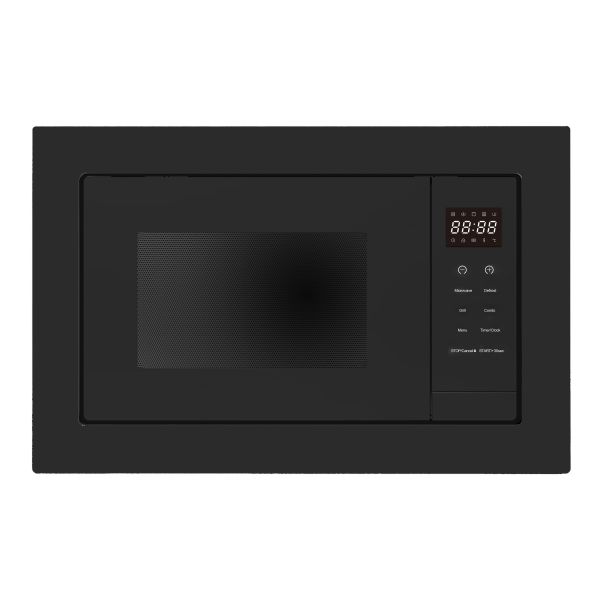
The smaller ones are around 38cm high and many are fairly shallow. The Indesit IM K12 BUK is 320mm deep and the Prima PRCM112 is 316mm. The Prima is listed as wall unit compatible, which is handy if you'd rather keep the microwave at eye level over the worktop and leave the tall housing for ovens. It's 700W with a 1000W grill and a 20 litre cavity, and comes with a 13A plug. Being shallow doesn't on its own make a model suitable for a wall unit, so for anything else, check the installation guide says it can go there.
The 45cm models are a different shape. Most are close to full oven depth, typically around 530 to 570mm, and they belong in a tall housing, usually stacked with an oven so the two line up.
Check the power side early too. Smaller models like the Prima come with a 13A plug, but a 45cm combination microwave can draw a lot more, so look at the connected load in the installation guide and let your electrician know before the kitchen goes in. Whatever the model, any socket wants to be in a neighbouring cupboard where you can reach it, not hidden behind the appliance.
Which way the door opens
Some built-in microwaves drop down like an oven door and some open from the side, so check the listing. The Electrolux KMFE172TEX and the Indesit IM K12 both open from the side. The Electrolux also returns its turntable to the starting position before the door opens, so whatever went in facing you comes out facing you. If a side-opening model is going next to a wall or a tall unit, check which side it hinges on so the door can open fully.
What warming drawers are really for
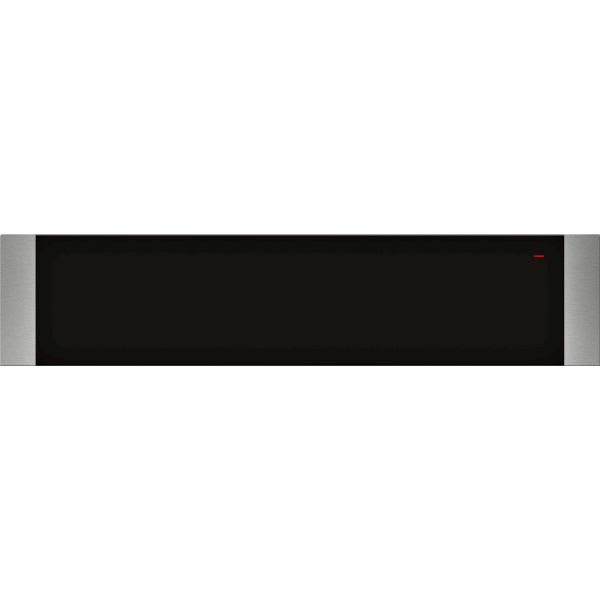
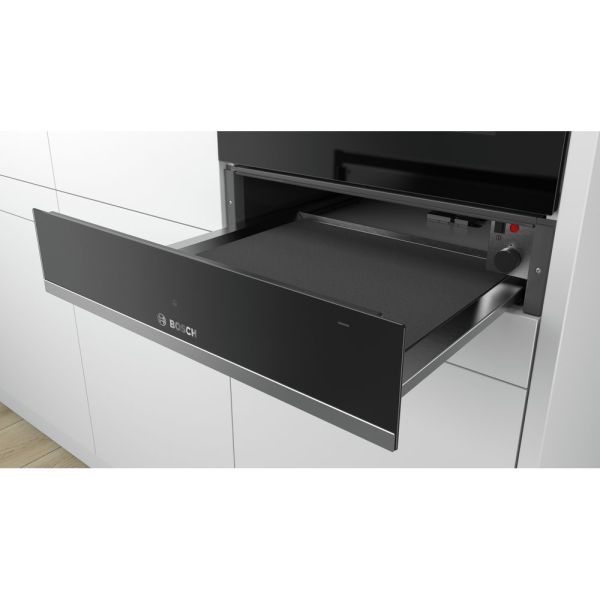
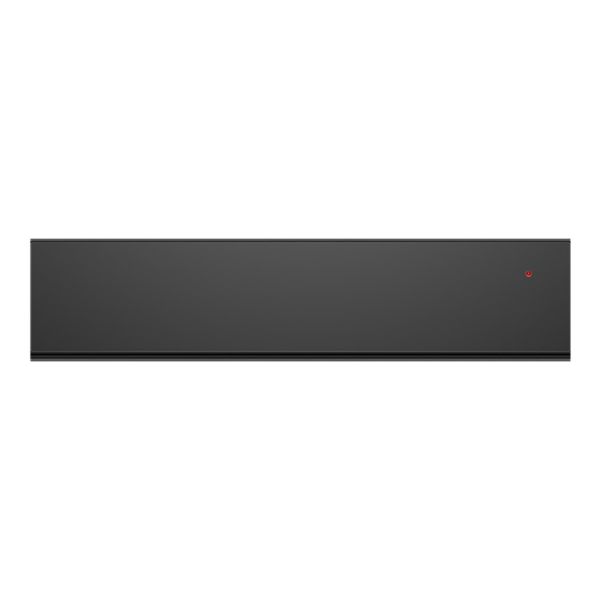
A warming drawer is a shallow heated drawer that usually sits under an oven or compact. The brochures say plate warming, keeping food warm, dough proving and defrosting. In real life, most of the use comes from the first two.
Warm plates sound like a luxury until you've had them. Food stays hot to the last mouthful, and for plenty of people that alone justifies the drawer. The second job is holding food that's ready before everything else is: the roast resting while you make the gravy, or one person's dinner kept warm because they're late in. The Neff N50 N1AHA01N0B holds 14 place settings and runs from 40 to 80°C, which is low enough for plates and high enough to keep food hot.
Dough proving is a real bonus if you bake bread, because a drawer holds a steady low warmth better than an airing cupboard. Both the Neff and the Bosch Series 6 BIC510NS0B list it. The Bosch adds a defrost function too. Fisher & Paykel's Series 9 WB60SDB1-SET goes further, with six programmes covering warming, proofing, dehydrating and slow cooking, and a range of 35 to 85°C.
Coffee drinkers, take note: Bosch say the Series 6 BIC510NB0 takes up to 64 espresso cups.
Making the stack line up
Warming drawers come in two heights, about 14cm and 29cm. The useful thing about those sizes is how they add up with the ovens beside them.
- A 45cm compact or combi (around 455mm) plus a 14cm drawer (around 140mm) comes to about 595mm, the height of a single oven. Put that stack beside a single oven and the tops and bottoms line up.
- A single oven (around 595mm) plus a 29cm drawer, like the Neff N70 N34HA11G1B, comes to about 885mm, within a few millimetres of a built-in double at around 888mm.
- A single oven, a 45cm combi and a 14cm drawer stack in one tall housing to roughly 1190mm, which is the classic three-high column.
Always check the exact heights on the spec sheets, because they vary by a few millimetres between brands. Wherever you can, buy the oven, microwave and drawer from the same brand and range, so the glass, the trim and the handles all match.
You can browse built-in microwaves and warming drawers separately on our site.
Solo, grill and combination microwaves from Neff, Bosch, Hotpoint, Electrolux, Prima and more, with warming drawers to match.
Shop Built-in MicrowavesFrequently Asked Questions
What is the difference between a microwave with grill and a combination microwave?
A microwave with grill adds a heating element in the roof for browning and crisping. A combination microwave also has a fan oven, so it can bake and roast on its own or together with the microwave. If you only reheat and defrost, neither is necessary.
Can a built-in microwave go in a wall unit?
Some can. The smaller 38cm models are often shallow, and some are listed as wall unit compatible, but only fit one in a wall unit if its installation guide allows it. The 45cm models are close to full oven depth and belong in a tall housing.
Is a warming drawer worth having?
If you like hot plates and often serve food at different times, yes. Most of the everyday use is warming plates and keeping finished food hot while the rest of the meal catches up. Dough proving and defrosting are useful extras on some models.
What height is a warming drawer?
Built-in warming drawers come in two heights, about 14cm and 29cm. A 14cm drawer under a 45cm compact or combination microwave makes roughly the height of a single oven. Check the exact figures on the spec sheets, as they vary slightly by brand.
Does a built-in microwave need a special socket?
Not always. Smaller built-in microwaves often come with a standard 13A plug, but larger combination models can draw more power, and some need a dedicated supply. Check the connected load in the installation guide and ask your electrician, and keep any socket in a neighbouring cupboard where you can reach it.